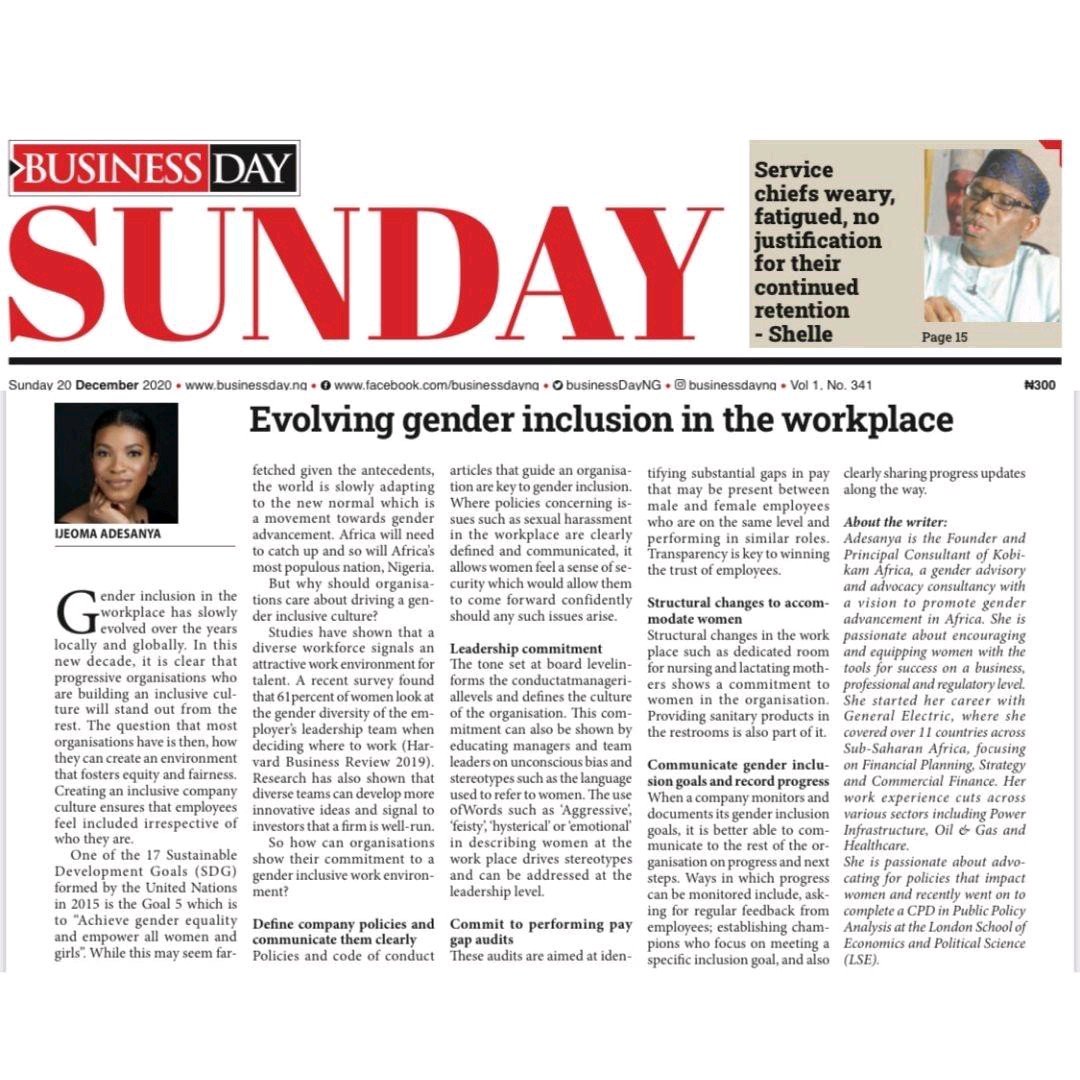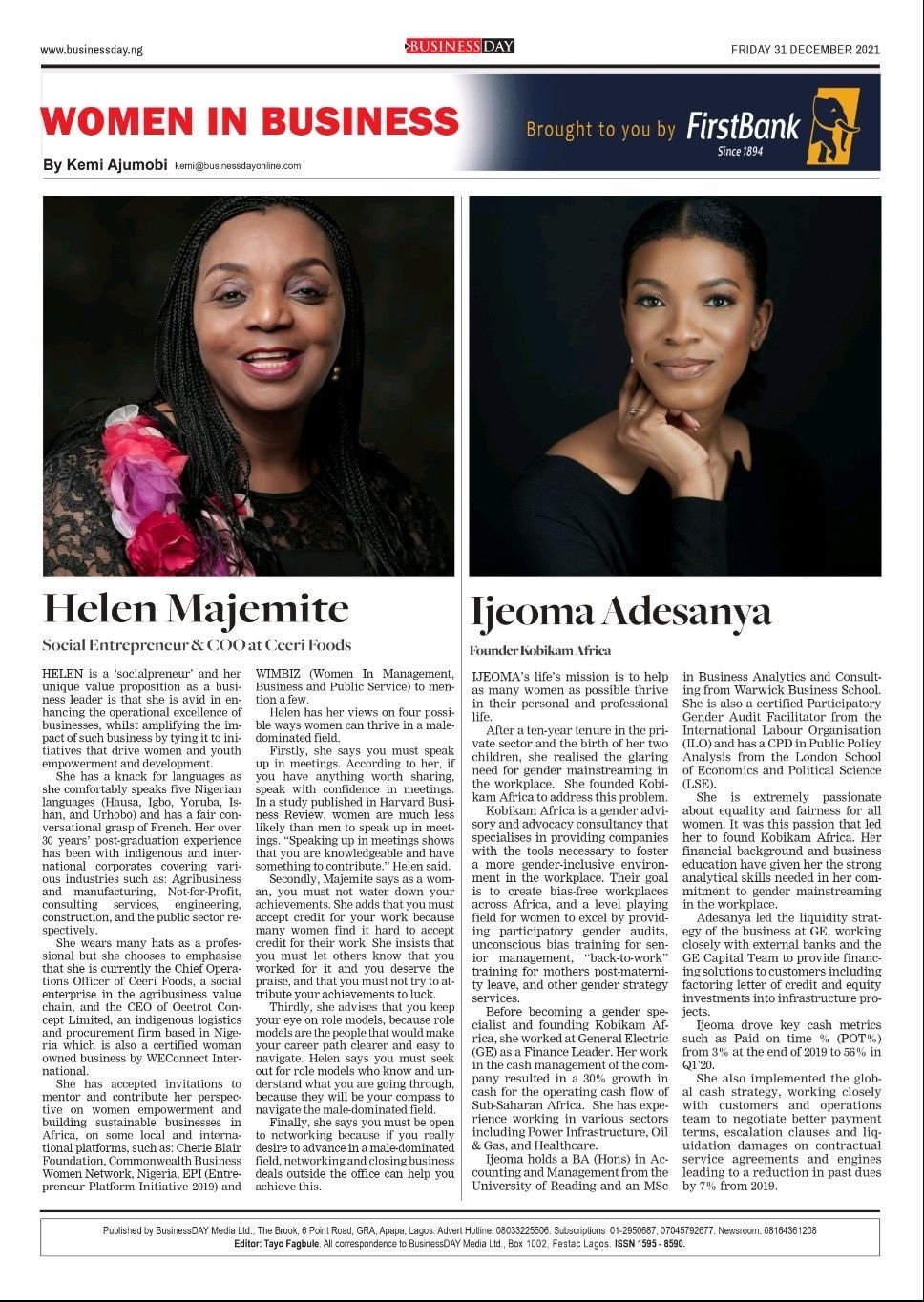
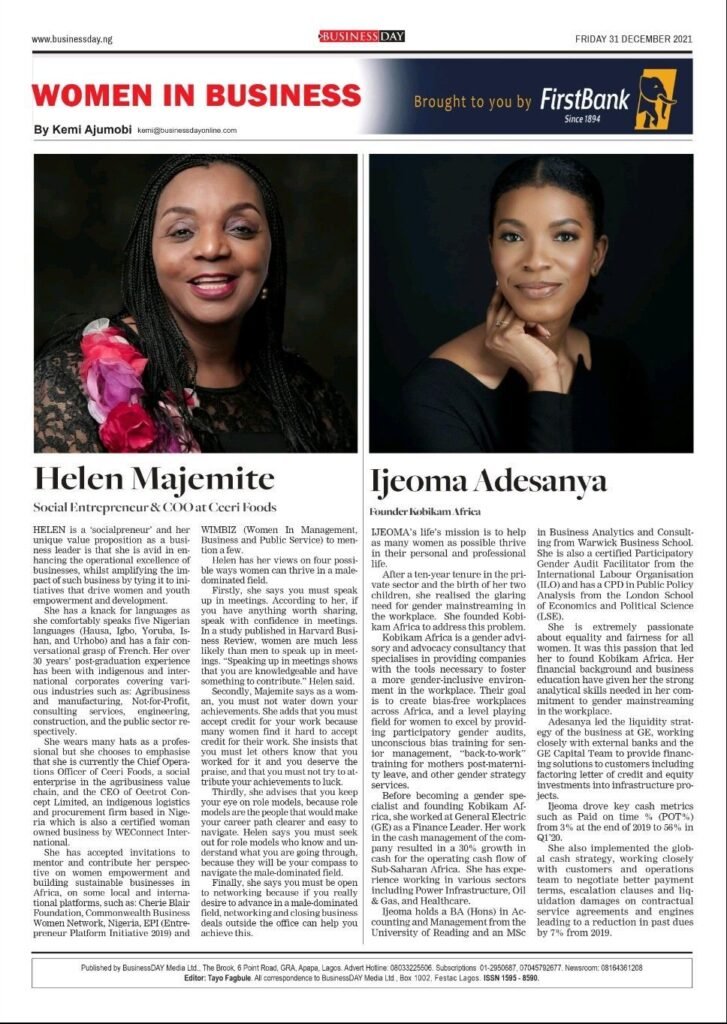
I was honored to be featured in Business Day’s “Women in Business” section, alongside incredible leaders like Helen Majemite. It got me reflecting on why true gender inclusion matters—and how we can all build workplaces where everyone thrives.
Why Gender Inclusion Isn’t Just a “Nice to Have”
Creating an inclusive culture isn’t about ticking a box. It’s about tapping into the full potential of every team member—no matter their gender. When women and under‑represented genders have equitable access to opportunity, decision‑making, and growth, businesses become more innovative, resilient, and profitable.
Four Steps to Drive Real Change
- Build Fair Recruitment & Promotion Paths
– Use blind screening to reduce unconscious bias.
– Define clear, competency‑based criteria for hiring and promotions—so expectations are transparent for everyone. - Invest in Mentorship & Sponsorship
– Pair emerging women leaders with senior sponsors who actively advocate for their advancement.
– Create peer‑to‑peer circles where experiences and strategies are shared in a safe space. - Embed Inclusive Policies & Practices
– Offer flexible work arrangements and robust parental‑leave policies.
– Regularly audit compensation and stretch‑assignment allocations to ensure parity. - Measure What Matters
– Track diversity metrics alongside business KPIs—everything from hiring pipelines to retention rates, pay equity, and leadership representation.
– Celebrate gains (and examine shortfalls) in quarterly reviews so accountability stays front‑and‑center.
My Own Journey
When I launched Kobikam Africa, I wanted to go beyond simply “checking the box.” Drawing on my background in Business Analytics from Warwick and policy training at the LSE and ILO, I partnered with organizations to design data‑driven gender audits, targeted leadership programs, and bias‑busting workshops. Over the past three years, I’ve seen teams transform—achieving stronger collaboration, better decision‑making, and a measurable lift in performance.
A Call to Action
Gender inclusion isn’t someone else’s problem—it’s everyone’s opportunity. Whether you’re a CEO, HR leader, or team member, you can spark change today by:
- Raising awareness of unconscious biases in your meetings
- Sponsoring a colleague for a stretch project
- Challenging policies that unintentionally favor one group
- Championing transparent data‑tracking at every level
Let’s turn headlines into habits. Together, we can build workplaces where purpose, performance, and parity go hand in hand.